get in touch

CADE is formed to promote dairy and agriculture sector and provide a platform to the enthusiasts who are willing to pursue their interest in these sectors.
Contact Us
- Call Us: +91 9671817307
- Email: info@cadedairyindia.com
- Regd. Office: B – 95, First Floor, Preet Vihar, Delhi-110092

Polyhouse Farming
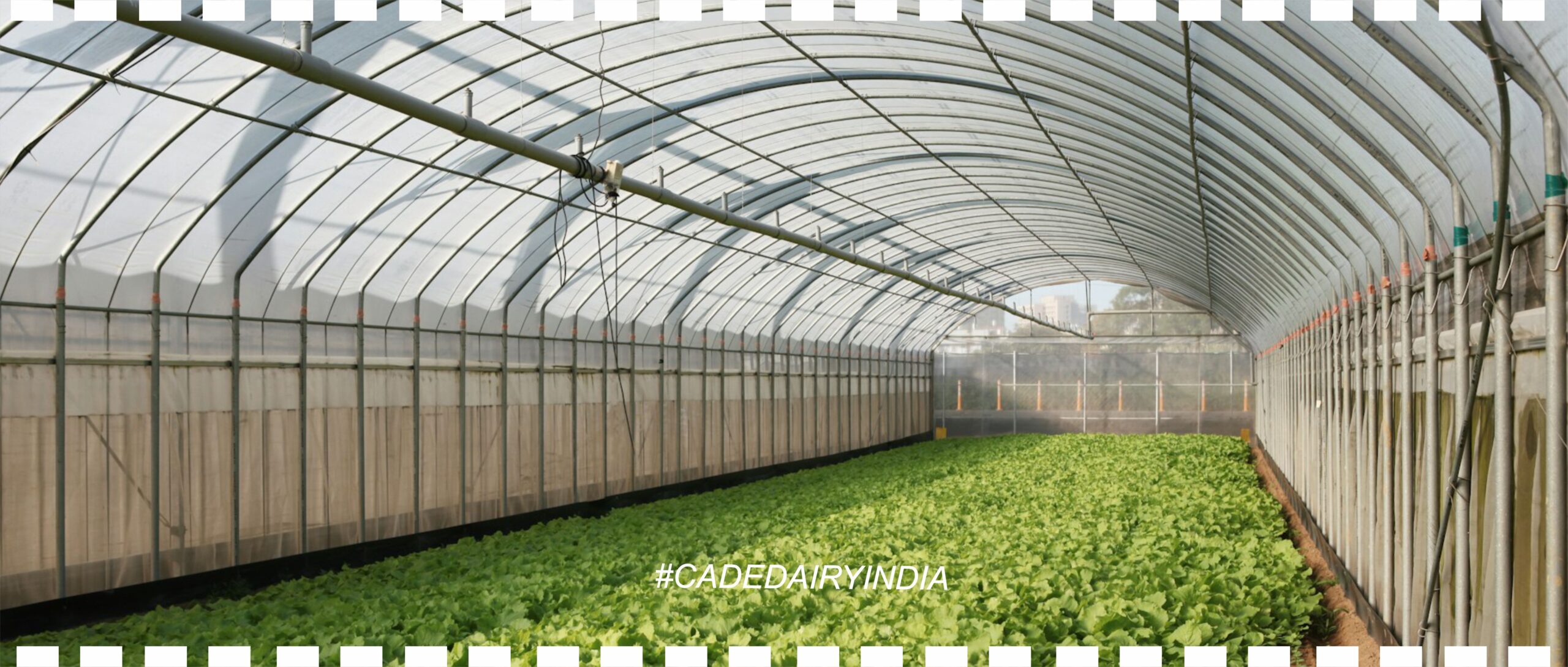
Polyhouse farming is a form of protected agriculture that uses specialized, transparent polyethylene structures to control environmental factors like temperature, humidity, and light for improved crop yield and quality. By protecting crops from pests, disease, and extreme weather, it enables year-round cultivation, significantly increasing production by 5 to 10 times compared to open fields.
Key Aspects of Polyhouse Farming
Environmental Control: The structures allow for the management of humidity, temperature, and ventilation to create an optimal, year-round growing environment.
Benefits: Key advantages include increased yield (5–10 times higher), high-quality produce, protection from pests and diseases, and efficient water and nutrient usage via drip irrigation and fertigation.
Suitable Crops: Ideal for high-value, perishable crops such as colored bell peppers (red, yellow), cucumber, tomatoes, leafy greens, and exotic herbs like basil, parsley, and rosemary.
Types of Structures: Ranges from high-tech, automated greenhouses to low-cost, naturally ventilated polyhouses or tunnels.
Costs and ROI: Initial investment is high, with operational costs often running between ₹4–7 Lakh per acre annually in India. However, it offers high returns, with annual profits potentially reaching ₹6–11 Lakh.
Government Support: Many governments provide subsidies and schemes to encourage farmers to adopt this, offering substantial financial aid to help set up the infrastructure.
Polyhouse farming is increasingly popular for its ability to produce high-value, off-season crops, making it a viable and sustainable option for modern agriculture.
Polyhouse farming is a specialized, budget-friendly type of greenhouse farming using translucent polythene to create a warm, protected, year-round environment for crops. While greenhouses can use glass or polycarbonate for long-term, high-tech control, polyhouses are ideal for cost-conscious, small-to-medium operations seeking to improve yield and quality in tropical climates.
Key Differences:
Materials: Polyhouses use UV-stabilized polyethylene sheets, whereas greenhouses often use glass or rigid, durable materials.
Cost & Durability: Polyhouses have lower initial setup costs but lower durability (years for poly film). Greenhouses represent a higher, long-term investment with greater durability (years).
Climate Control: Both offer environmental control, but greenhouses generally provide more precise, advanced control (fan & pad systems) compared to naturally ventilated polyhouses.
Suitability: Polyhouses are better for tropical climates and small/medium farming, while greenhouses are suitable for extreme, cold, or highly controlled commercial farming.
Which to Choose?
Choose a polyhouse if you are just starting, have limited capital, or are in a region where you just need to manage rain/pests. Choose a greenhouse for long-term investments, high-value, or off-season production requiring strict temperature regulation.