get in touch
CADE is formed to promote dairy and agriculture sector and provide a platform to the enthusiasts who are willing to pursue their interest in these sectors.
Contact Us
- Call Us: +91 9671817307
- Email: info@cadedairyindia.com
- Regd. Office: B – 95, First Floor, Preet Vihar, Delhi-110092

Dairy Farming
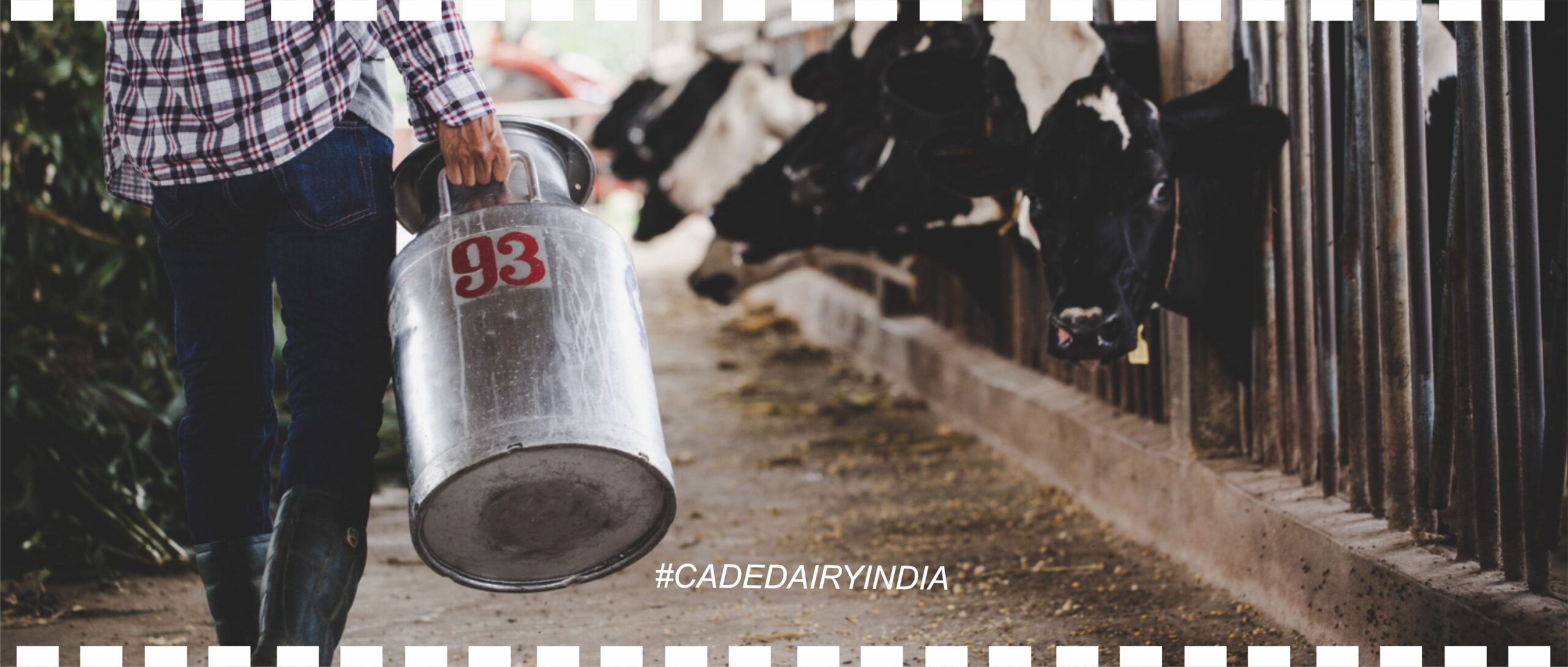
The livestock sector plays a pivotal role in the rural economy, contributing significantly to the livelihoods and well-being of the farmers. Over the period, the contribution of the livestock sector in agriculture sector has been showing steady improvement that signifies its growing importance in the Indian economy.
It serves as a source of food, income and employment, while also fostering rural development. Animal products such as milk, by products and other allied activities not only provide essential nutrition but also generate daily cash income for millions. Beyond rural areas, this sector is a key driver of the national economy and socio-economic development of the country.
India takes pride in being home to the largest livestock population in the world contributing significantly to the economy, livelihoods and nutrition security. As the world’s largest milk producer, our livestock resources continue to play an integral role in strengthening the agricultural sector and ensuring steady growth in this vital domain of the Indian economy.
Practice to profitable dairy business:
Most of the rural families across India are engaged in dairy production and the rural market consumes over half of the total milk produce. About 75% of milk is consumed at the household level which is not a part of commercial dairying. Loose milk has a larger market in India as it is perceived to be fresh by most consumers. Hence commercialization of dairy farming as a business activity is the need of the hour. Most of the farmers keep 2-3 dairy animals and sell milk locally. Thus, dairying business goes virtually unnoticed and is seen as a subsidiary farming activity.
Role of milk importance in human life:
Milk plays an important essential food for human life, since babyhood to end of elderly life. Milk is a complex food that contains vital nutrients for the bodies of young mammals. Milk is the only food of the mammal during the first period of its life and the substances in milk provide energy and antibodies that help protect against infection. For humans, milk and dairy products make a significant contribution to meeting our bodies’ needs for calcium, magnesium, selenium, riboflavin, vitamin B12 and pantothenic acid (vitamin B5) and therefore play a key role for make healthy and happiness in our development.
Co-operative to community dairy farming system:
Dairying is an important source of subsidiary income to small/marginal rural farmers and agricultural labourers. The manure from animals provides a good source of organic matter for improving soil fertility and crop yields. The gober gas from the dung is used as fuel for domestic purposes as also for running engines for drawing water from well. The surplus fodder and agricultural by-products are gainfully utilized for feeding the animals. Almost all draught power for farm operations and transportation is supplied by bullocks. Since agriculture is mostly seasonal, there is a possibility of finding employment throughout the year for many persons through dairy farming. Thus, dairy also provides employment throughout the year.
Development of dairy hubs linking smallholder farmers to the industry , by making all cluster villages cattle is to brought in to BMC /CC collection point , where AMCU station operate automatic milking machines , immediate cooling and transport by tanker to process plant.
Indian Dairy Quality Situation
As per the FSSAI sample survey 68-70% of the milk is found adulterated, which is not safe for the human consumption and for further product conversion and export.
Factors influence on quality production:
Food safety:
1. Lack of quality medicines no regulatory framework for medicine quality,
2. Adulteration milk (dirty water, sugar, salt, detergents, urea, vegetables and mineral oils, foreign fat, skim milk powder, preservatives, formalin , H2.O2 ).
3. High bacteria count, spread of unknown diseases, and shelf life product.
Losses:
1. As much as 25-30% of milk is lost/ spoilage before it reaches to consumers.
2. Not all milk can be sold (evening milk, flush season excess milk).
3. Lack of cooling spoils milk before it is consumed or processed.
4. Middle man role in malpractices.
Demand drives and growth environment:
1. Largest milk producer communities.
2. Fast growing economy, consumer preference for hygiene and fresh milk.
3. Annual highest milk production growth.
4. Emerging competent regulatory system and authority.
5. New Food safety and standard law
6. Trained S &T human resource
7. Research and Educational Institutes (NDRI, NDDB, CFTRI).
8. Strong successful cooperative movement', in particular parts of India.
Emerging need of healthy safe quality clean milk system
It is an urgent need for the Indian dairy industry to improve the quality of milk and milk products by adopting better handling practices from procurement to promotion of product. By putting advance technologies and testing facilities at different stages, until reaching its consumer. To ensure pure safe healthy hygiene milk for consumers, and export of products.
Extending scope for commercial / corporate Dairy Farming in India:
One of the emerging trends in Indian dairying is the growing number of the commercial dairy farms in the urban and peri-urban areas of the metros and big cities. These dairies mainly cater to the needs of the urban consumers.
In this junction there is urgent need for organized & modernized dairy farming. Commercial dairy farming is much different from villagers who rear few cows. Later does not employ labor, cultivates most of the green fodder needs on his own land with own labor, does not have to pay bank interest and above all invest too low in infrastructure facilities.
Though a profitable business venture dairy farming in India requires hard work, proper planning and active and very alerts for managers and supervisors. We all have heard many success stories in dairy farming. In today's technological world there have been many advances in modern dairy farming. Everything from feed for dairy cows to milk processing equipment has added tremendous scope to the dairy farming industry.
Main Objective of dairy farming
Safe, quality milk is produced from healthy animals using management practices that are sustainable from an animal welfare, social, economic and environmental perspective.
Good practices of dairy farming
Animal Health, Milking, Hygiene, Nutrition, Feed & Water, Environment management.
Uniqueness management system:
1. Animals that produce milk need to be healthy and an effective health care programme should be in place.
2. Milk will be harvested and stored under hygienic conditions Equipment used to harvest and store milk will be well maintained.
3. Animals need to be provided with feed and water of suitable quantity and quality
4. Animals will be kept according to the following principles:
- Freedom from hunger and thirst.
- Freedom from discomfort.
- Freedom from pain, injury and disease.
- Freedom from fear.
- Freedom to engage in relatively normal patterns of animal behaviour.
- Milk production should be environmentally sustainable and cause minimal damage to the surrounding environment.
- Human resource and financial management ensures the sustainability of the enterprise.
- Animal waste management system development (Urine, dung, water).
- Animal history management record.
- Technical application is required in applicable areas Ex: Milking, chilling.
Elements for commercial dairy farm productivity and profitability
- Soil and forage management.
- Young stock management.
- Nutrition and feed management.
- Disease prevention and control.
- Reproductive and heat detection.
- Genetic improvement.
- Staff skill development training.
- Manure and renewable energy management.
- Value adding of milk.
Benefits of commercial dairy farming
- Opportunity for export of milk and milk products.
- Free antibiotics milk which is suitable for infants to elderly people.
- Safe, Healthy and hygiene of milk will increase the shelf life of milk.
- Organized & well planned project.
- Better management and operations of project.
- Better climate control.
- Cost effective.
- Healthy and happy animals.
- More production, better hygiene.
- Better return to investment and profits.
- Opportunity for export of milk and milk products.
- Free antibiotics milk which is suitable for infants to elderly people.
- Health and hygiene of milk will increase the shelf life of milk.
Cow waste makes many economic benefits in present trend:
- Health & Nutrition / Panch-gavya / Medicine / Fertility of soil / Bio Gas plant.
-Bio Power plant / Bio Pesticides / Draught Power.
Commercial and small scale dairy farming in India is no doubt playing an important role in the total milk production and economy of our country. And almost all regions of India are suitable for setting up dairy farming business. Most of the dairy farmers in India are raising animals in small scale traditional methods. They are not aware about the modern farming methods and improved techniques for dairy farming. As a result, some farmers are losing their investment instead of being benefited. Proper business plan, well management and care can ensure maximum production and profit from dairy farming business.
The best approach is to create and run a sustainable dairy farm that gives maximum profits to the firm and also takes care of the effects of dairy farms on environments and animals for a longer period.