get in touch

CADE is formed to promote dairy and agriculture sector and provide a platform to the enthusiasts who are willing to pursue their interest in these sectors.
Contact Us
- Call Us: +91 9671817307
- Email: info@cadedairyindia.com
- Regd. Office: B – 95, First Floor, Preet Vihar, Delhi-110092

Honey Processing
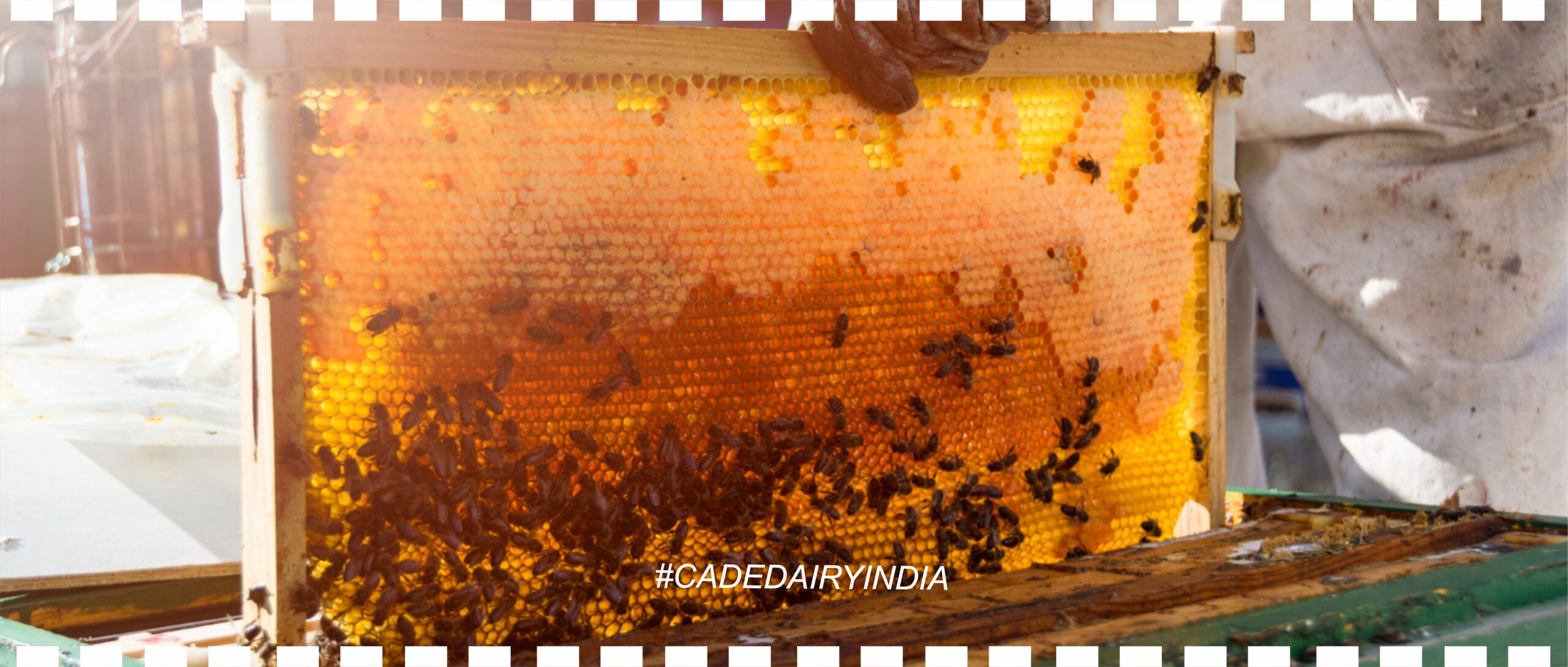
Honey processing involves extracting nectar from hives, removing wax capping, centrifuging frames to spin out honey, filtering, and bottling. Key steps include filtration to remove debris and sometimes gentle heating (30–50°C) to reduce viscosity, facilitate packing, and prevent early crystallization. While industrial methods may involve higher heat, raw honey minimizes processing to preserve nutrients.
Key Honey Processing Steps
Harvesting: Beekeepers remove capped honeycombs from hives.
Uncapping: Wax caps sealing the honey cells are removed using a heated knife or specialized tools.
Extraction: Uncapped frames are placed in a centrifuge-style extractor, which spins to force honey out of the combs.
Filtration/Straining: Extracted honey is passed through sieves or mesh filters to remove wax particles and debris.
Settling: Honey is left in a tank for 1-3 days to allow air bubbles and microscopic particles to rise, producing cleaner, clearer honey.
Bottling & Storage: The processed honey is packed into containers.
Common Processing Methods
· Raw Processing: Honey is extracted, strained, and bottled without heat, ensuring enzymes and pollen remain intact.
· Conventional/ Industrial Processing: Honey is heated (up to 70°C) to destroy yeast, delay crystallization, and improve flow, although this can destroy beneficial enzymes.
· Crush and Strain: Primarily used for comb honey, the comb is crushed and the honey allowed to strain through a cloth.
Quality Control Factors
· Moisture Content: Ideally, honey should be around 18% moisture for optimal quality; higher moisture can lead to fermentation.
· Temperature Control: Gentle heating is crucial, as temperatures exceeding 45°C can diminish nutritional value and damage aroma.
· Filtering Levels: While finer filters (10 to 50 microns) remove all particles, they also remove pollen, which is often considered desirable for raw, unrefined honey.